Wedding colors · A practical planning guide
Your wedding color palette is much easier to share when everyone can see the shades you mean. A few color swatches and HEX codes give your vendors a starting point. Real samples help you decide what to order.
“Dusty rose” can mean a peachy pink to one person and a muted mauve to another. Neither is wrong, but if you have a particular shade in mind, the name alone leaves a lot open to interpretation.
This guide will help you put your wedding colors into a simple, shareable palette, use a wedding color palette generator, and explain which shades matter most to you. You will also find three example color schemes and a vendor message you can adapt.
How do you create and share a wedding color palette?
Choose a starting color, add a few supporting shades, and save a palette with color names and HEX codes. Label where you hope to use each shade, then share it with your vendors. Before ordering flowers, fabrics or printed pieces, compare the available samples and proofs.
How to Use a Wedding Color Palette Generator
A wedding color palette maker is useful when you know you love one shade but are unsure what to put beside it. You can also start with a ready-made combination and see which parts you would change.
Our free Wedding Color Palette Creator lets you browse curated wedding color schemes by color, aesthetic or season, or build your own five-color combination.
- Start with a favorite. It might be a bridesmaid dress, a flower you love or a color that already appears in your venue. If that item is essential to you, find out whether it is available before building everything around it.
- Browse or build. Explore the curated palettes, or open Build Your Own and choose a starting color. The builder suggests companion shades to get you going.
- Adjust the combination. In the custom builder, use the color pickers to change any of the five shades. Try a warmer ivory, a softer green or a deeper accent and compare the result.
- Give each color a role. Decide which shade will appear across larger surfaces and which will be a smaller detail. You do not need equal amounts of every color.
- Keep your reference together. Name your custom palette and request your palette and styling guide by email. Add your notes about fabrics, flowers and where you want to use the colors.
If you are still choosing your starting shades, our guide to choosing wedding colors for your style and venue can help.
Have a color in mind?
Try it beside a few supporting shades. You can browse the collection or create your own combination.
Create My Wedding Color PaletteFree palette creator · Color names and HEX codes included
What Is a HEX Code?
A HEX code identifies a digital color. In the six-digit format used here,
the # is followed by three pairs of numbers or letters.
Those pairs describe the red, green and blue components of the color.
For example, #C9A9A6 gives a dusty rose reference. The name
describes the color in everyday language; the code gives a designer
a specific digital value to use.
C9
Red: 201
A9
Green: 169
A6
Blue: 166
You do not need to learn the color math to use your palette. Copy the complete
code, including the #, into a design tool that accepts HEX
values, or include it beside the swatch you share.
For a technical explanation, see MDN’s guide to HEX color notation.
Why Color Names Alone Can Be Confusing
These three illustrative shades could all be described as dusty rose. Seeing them together makes it easier to explain whether you mean something warmer, cooler or more pink.
Warmer rose#DCAE96
Muted rose#C9A9A6
Soft pink#E8B4B8
Sending one of these references narrows the conversation. Your florist can explain which flowers are close to it, and your rental company can show you the nearest linen options. They may have different names for those colors.
Will a HEX Code Make Everything Match?
A HEX code gives your team a shared digital reference. It does not guarantee that a rose, a silk ribbon, a linen napkin and a printed invitation will look identical.
Materials reflect light differently. Screens can display colors differently too, and printed results depend on the paper and printing process. Natural flowers have their own variations. Ask your vendors what they can supply, then compare samples before placing the order.
A useful way to work: keep the HEX code for digital designs, and keep an approved physical sample or proof for the item you are buying. If an exact shade is especially important, tell the vendor before booking.
What to Send Each Wedding Vendor
You can share the same overall palette with everyone, then add the details relevant to their part of the day.
| Vendor | Send this | Confirm before ordering |
|---|---|---|
| Florist | Palette, flower references and notes about shades you want to include or avoid. | Flower availability, likely color variation and acceptable substitutions. |
| Stationer or designer | HEX codes, color names and the pieces you want to coordinate. | Their print specifications and the proof you should approve. |
| Linen or rental supplier | Palette plus the tablecloth, napkin and other items you need. | The supplier’s actual color names and sample options. |
| Dress retailer | Your overall color direction and any essential outfit combinations. | Fabric swatches, availability and any dye-lot guidance for the order. |
| Planner or decorator | The current palette, approved samples and a list of where each color will appear. | Which version is final and who will communicate changes to the other vendors. |
Put fabric samples beside your flowers or floral references where possible. Look at them in daylight and in your venue’s lighting. You may find that a slightly different shade works better once you see the materials together.
Three Wedding Color Palettes With HEX Codes
Use these as starting points rather than a shopping list. Each palette has five shades, but you can give more space to the colors you like most. These are illustrative combinations; similarly named palettes in the Creator may use different HEX values.
Dusty Rose and Sage
- Dusty rose
#C9A9A6 - Warm blush
#D4B2A7 - Sage
#A8B5A2 - Warm ivory
#F5F0EB - Taupe
#8B7355
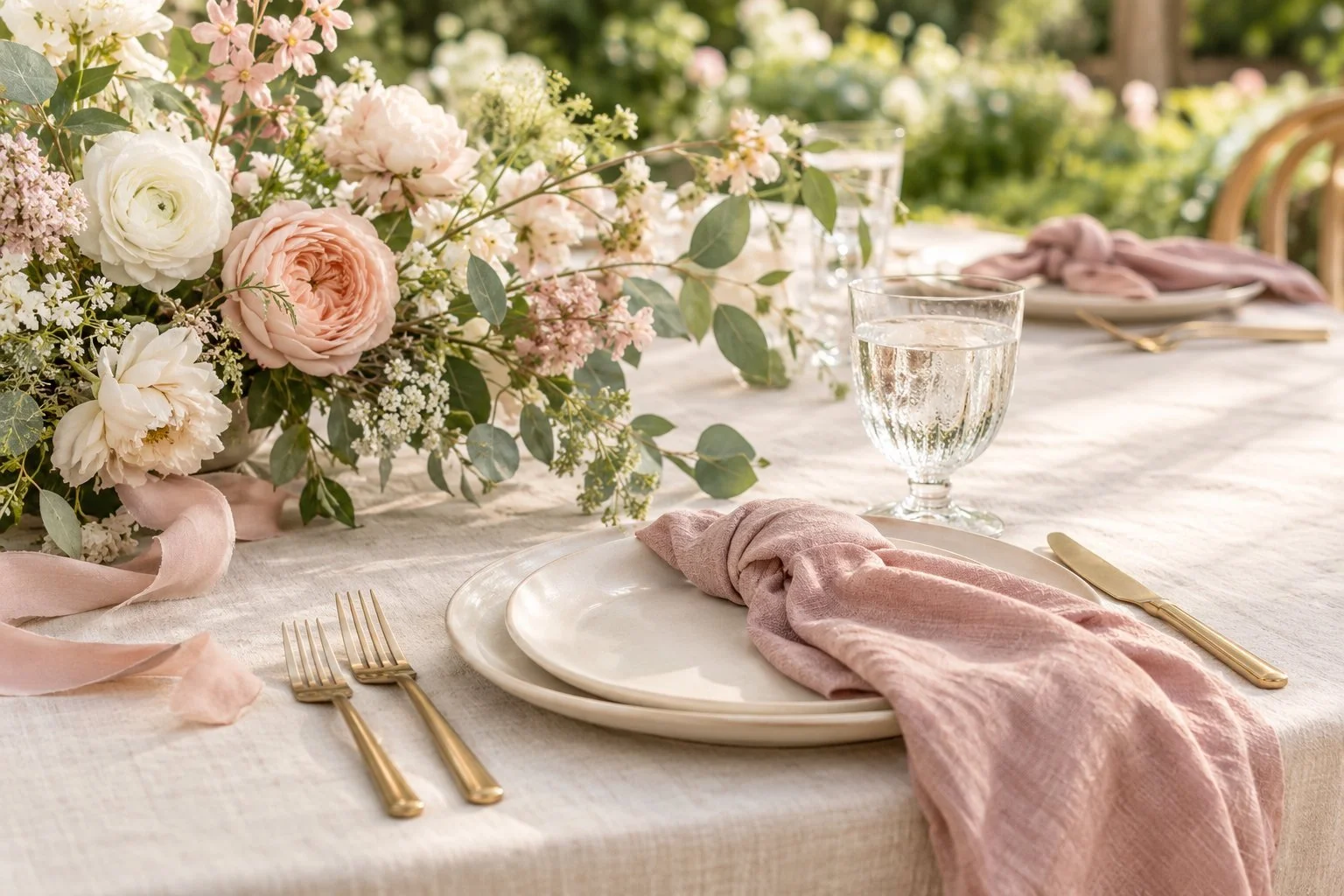
Try warm ivory linens with dusty rose napkins, then bring sage into the foliage. The taupe can stay in smaller details such as ribbon or stationery. Ask to see the rose and blush fabrics together before choosing both.
Navy and Champagne
- Navy
#2E4057 - Cream
#F2E8D5 - Champagne
#C9B99A - White
#FFFFFF - Soft grey
#8B8589
Use cream or white across larger surfaces and repeat navy in napkins, stationery or an outfit detail. The champagne swatch represents a flat digital color; reflective gold or champagne finishes need to be chosen from actual samples.
Terracotta and Olive
- Terracotta
#C17C5E - Olive
#A4956A - Soft peach
#E8D5C4 - Warm brown
#6B5B4E - Cream
#F0E6D8
Let cream keep the tables light, with terracotta in textiles or flowers and olive in foliage. At a venue with dark wood, compare the warm brown accent against the furniture before adding more of it.
Planning Your Wedding Colors for 2027?
If you are looking for 2027 wedding colors, save a few combinations you would be happy to use beyond a trend photo. Then compare them with your venue, the flowers available for your date and any outfits you have already chosen.
Our 2027 wedding color palettes guide explores combinations to consider, while the spring wedding colors and fall wedding colors guides offer seasonal ideas. Use those articles for inspiration, then return to your palette to decide which shades fit your own plans.
You do not need to replace a color you love because a different one appears in a 2027 wedding color trends roundup. Once you have ordered fabrics or approved print proofs, make later changes with those commitments in mind.
A Wedding Color Message You Can Send to Vendors
Copy this message and fill in your choices. Attach the palette so the vendor can see the colors as well as read the codes.
Hi [name],
I’ve attached our wedding color palette. Our main color is [name and HEX code], with [supporting colors] and [neutral]. I’m hoping to use [color] for [item or area], with [accent] in smaller details.
The HEX codes are our digital references. Could you show us the closest available materials, samples or proofs for the items you are supplying?
We would particularly like to keep [important color or detail]. We are flexible about [shades, flowers or materials]. Please let us know about availability, likely variations or substitutions before we finalize the order.
Thank you!
Give your final file a clear name, such as Wedding Palette — Approved — [date]. If anything changes, send the updated version to everyone affected so an older screenshot does not become the reference by mistake.
HEX, CMYK and Pantone: Which Do You Need?
HEX is useful for digital designs. CMYK describes a common printing process. Pantone provides color systems used for different materials and production needs.
You do not need to convert your palette into every system yourself. Send your digital reference to the designer or supplier and ask which specification and approval process they use. A conversion is not a promise that the finished material will look exactly like your screen.
Pantone’s color-matching guidance also recommends physical guides and consultation with the print provider when an accurate print match matters.
Check These Details Before You Order
- Color roles: everyone knows which shade is the main color and which are accents.
- Actual samples: you have checked the available fabrics, finishes or print proofs for important purchases.
- Lighting: you have looked at key samples in the venue or in comparable light.
- Availability: your florist and suppliers have explained what is available for your date and what may need to change.
- The final reference: your vendors have the same approved palette and notes.
A little variation can make the finished setting feel more natural. The aim is to know which differences you are happy with before everything arrives.
See the Colors Alongside Your Decor Ideas
Once you have a palette, create a mood board to explore it with flowers, fabrics and your chosen setting. It gives you another reference to discuss with your partner and vendors.
Create My Free Wedding Mood BoardTwo free boards delivered by email. No account or credit card needed.
Wedding Color Palette Questions
How many colors should be in a wedding palette?
Four or five shades can be a useful starting point, especially when the palette includes a neutral. You can use fewer if you prefer. Decide which colors will cover larger areas and which will appear only in details.
Is a wedding color palette generator free to use?
The WeddingDecor.com Wedding Color Palette Creator is free to use. You can browse curated combinations, build a custom five-color palette, adjust its shades and request your palette and styling guide by email.
Can I make a wedding palette from a color I already love?
Yes. In the custom builder, choose a starting shade, generate the companion colors and adjust the five shades with the color pickers. If your starting point is a physical dress or fabric, keep the actual sample as your ordering reference too.
Can florists match HEX codes exactly?
A HEX code helps explain the shade you mean, but flowers vary naturally and availability changes. Share the code with flower references, explain which tones you want to avoid and ask your florist about likely options and substitutions.
Why do my wedding colors look different on my phone and in fabric?
A screen displays color using light; fabric reflects the light around it. Screen settings, material texture and lighting can all affect what you see. Use the digital palette to communicate your direction, then approve physical samples where possible.
Do wedding color schemes have to match across every detail?
They can coordinate without being identical. You might repeat dusty rose in stationery and napkins, then use several related pinks in the flowers. Tell your vendors which shades need to stay close and where you welcome variation.
Can I use this guide with a wedding colour palette generator?
Yes. The same process applies whether a tool uses “color” or “colour.” Keep the names and HEX values with your saved palette, and check real samples before ordering physical items.
Should I choose my 2027 wedding colors based on trends?
Trend guides can help you discover combinations, but your venue and existing choices still matter. Compare a few palettes, check what suppliers can provide and choose the colors you want to see on your day.
Have a Photo of Your Venue?
Try a decorating concept in the Wedding Design Studio to explore how your colors and decor ideas could look in the space. Share the result with your vendors to discuss what will work in practice.
Explore the Wedding Design StudioYour first venue design is free with an account. No credit card needed.